
Namibia travel · NamSpace
Best Time to Visit Namibia: A Month-by-Month Guide
Choose your travel month around the coast, desert, wildlife and regional conditions.
As an Amazon Associate I earn from qualifying purchases. This article contains optional Amazon links. Check delivery and the full cost before buying.
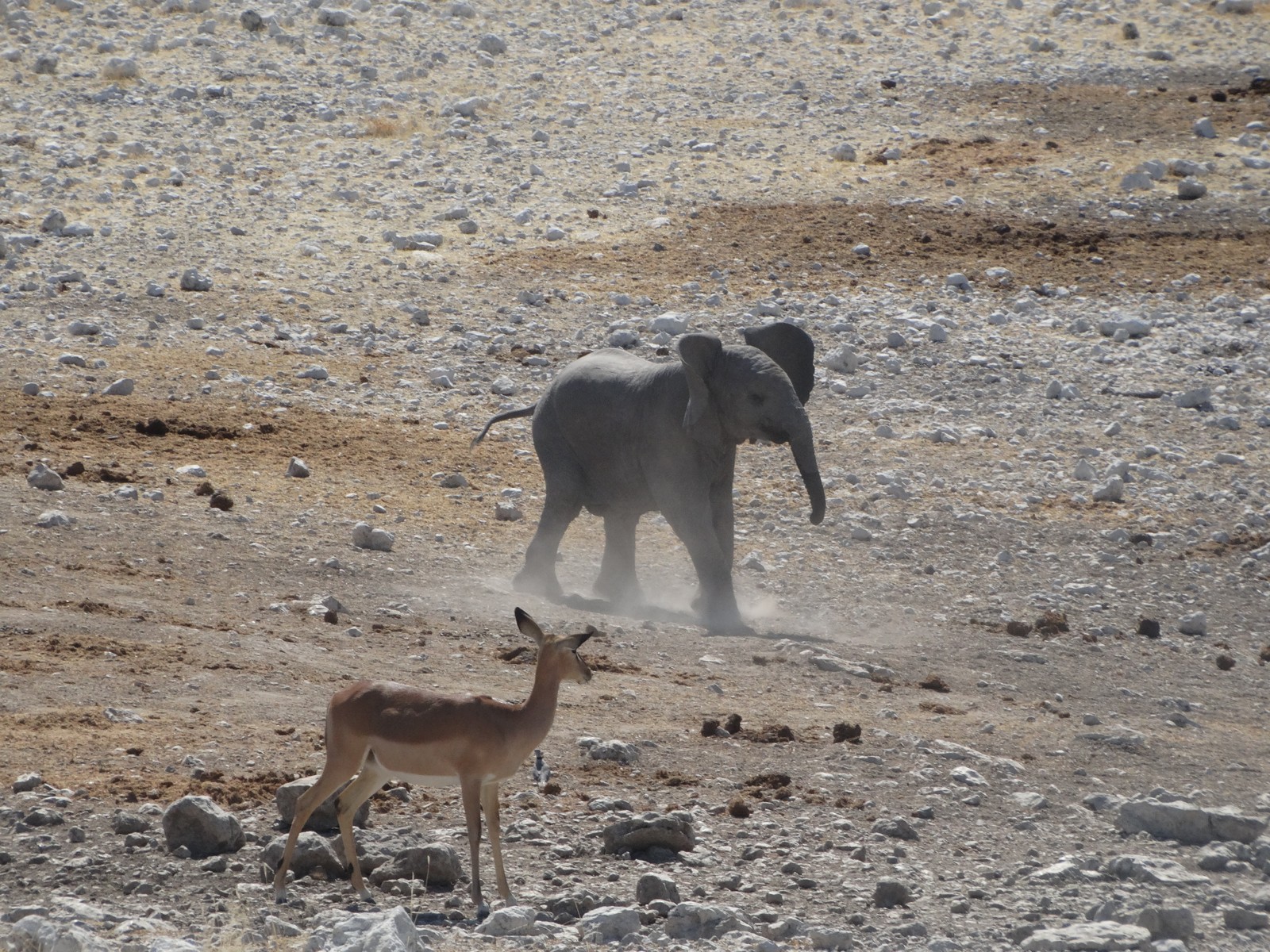
Image credit & rights
Baby elephant playing fake charge.jpg — Benoît Vicart, via Wikimedia Commons. CC0 1.0. Source: https://commons.wikimedia.org/wiki/File:Baby_elephant_playing_fake_charge.jpg. Licence: https://creativecommons.org/publicdomain/zero/1.0/. Resized for web; no scene content changed.

Last checked: 4 October 2026
There is no single best month to visit Namibia.
There is a best month for the Namibia you want to experience.
If your priority is classic Etosha wildlife viewing, the dry months make a strong case. If you want greener landscapes, dramatic skies and birdlife, the rainy season gives you a very different country. If you hate cold mornings, July may not feel as perfect as the brochures make it sound. If you are heading to Swakopmund, the coast follows its own rules anyway.
So instead of giving every traveller the same answer, this guide looks at Namibia month by month: what the country generally feels like, what that period is especially good for, what the trade-offs are, and where you may want to spend more of your trip.
Namibia is a year-round destination. The question is not whether you can come. It is what kind of trip you want when you do.
Namibia's seasons in one minute
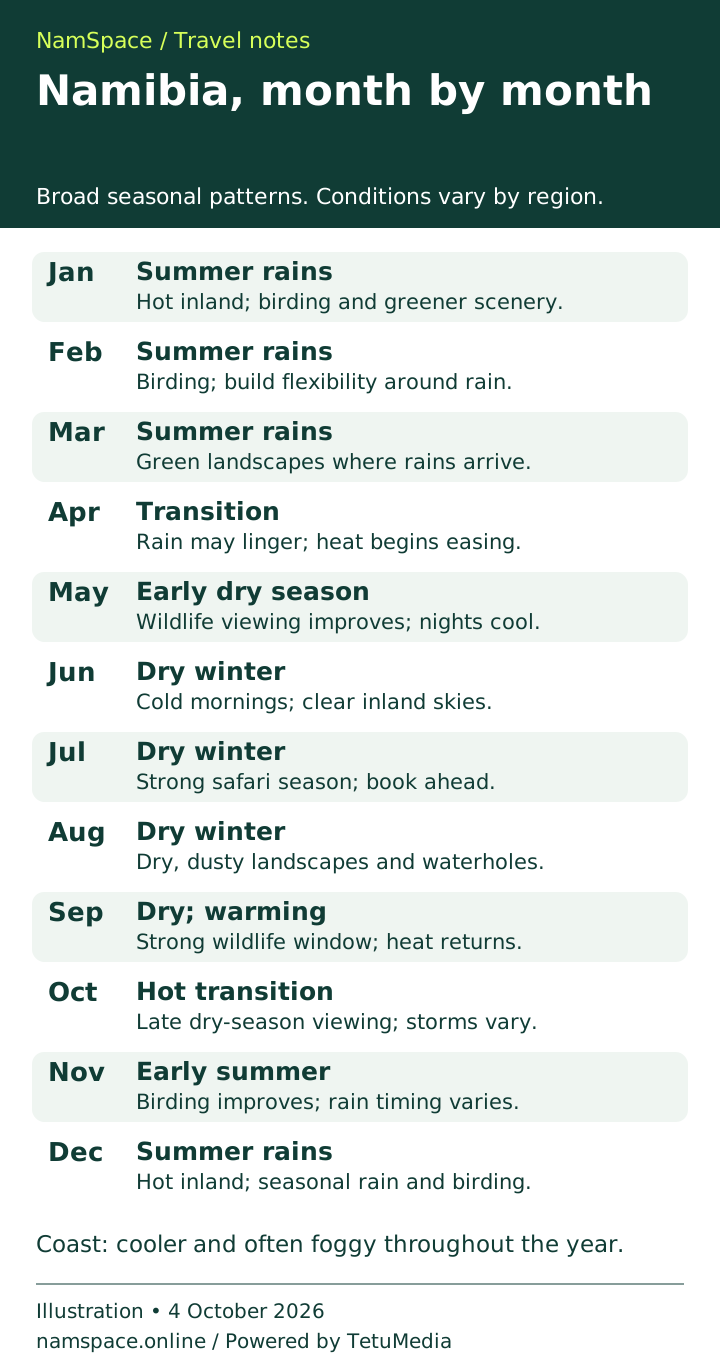
Image credit & rights
Illustration: NamSpace. Powered by TetuMedia.
Namibia Tourism Board guidance broadly divides the year like this:
- Summer: October to April. Hotter overall, with the main rainy season generally falling between December and April.
- Winter: May to September. Drier, with pleasant days in many areas but cold nights and early mornings inland and in the desert.
- Best general wildlife-viewing period: May to October.
- Best general birding period: November to April, when rains and migratory species change the landscape.
- Coast: Cooler than the interior throughout the year because of the Benguela Current, with fog common around places such as Swakopmund and Walvis Bay.
- Peak tourism period: Namibia Tourism Board currently describes July to November as peak season, although official 2024 arrival data showed travel spread more evenly across the year than in some earlier years.
Those are broad patterns, not weather guarantees. Namibia is large enough that the Namib Desert, central plateau, Atlantic coast and Kavango-Zambezi river systems can feel like different countries on the same day.
Quick answer: which months are best for what?
| If this is your priority | Strong months to consider |
|---|---|
| Classic wildlife viewing | May to October |
| Etosha waterhole viewing | Especially the drier part of May to October |
| Birding | November to April |
| Green landscapes | January to April, depending on rainfall |
| Clear, dry road-trip weather | May to September |
| Stargazing | Dry winter months are particularly strong |
| Fewer peak-season pressures | Generally outside July to November |
| Kavango/Zambezi birding | Wetter months, especially November to March |
| Kavango/Zambezi game viewing | Drier months, roughly June to October |
| Coastal escape from inland heat | Swakopmund and Walvis Bay remain cooler than the interior year-round |
Now let us go month by month.
January — green, hot and alive
January is summer Namibia.
Expect heat inland and the possibility of rain, especially as you move north and north-east. The rain does not necessarily mean days of continuous grey weather. Namibia's summer rain often arrives in shorter storms, and the country can change quickly after good rainfall.
This is when travellers who only know Namibia from photographs of dry plains can discover a completely different side of it.
Vegetation can become greener. Temporary water appears. Clouds make sunsets more dramatic. Birdlife becomes a major attraction.
January is good for
- birding;
- greener landscapes;
- photographers looking for clouds, colour and contrast;
- Kavango and Zambezi for travellers interested in river systems and birds;
- visitors who do not need the classic dry-season Etosha experience.
The trade-off
Wildlife can be more dispersed because natural water is more widely available. In Etosha, that means animals do not need to concentrate around the same permanent waterholes as strongly as they do later in the dry season.
Road conditions in some remote areas can also be affected by rain. Check your actual route rather than assuming every gravel road behaves the same way.
NamSpace view: Choose January because you want summer Namibia, not because somebody told you it is the cheapest version of July.
February — summer continues, and birding remains a major reason to come
February remains part of the main rainy season.
It can still be hot, humid by Namibian standards in wetter regions, and visually very different from the dry-season version of the country.
For birders this remains one of the most interesting parts of the year. Namibia Tourism Board identifies the rainy season from November to April as the country's best general bird-watching period, when migrant species are present and breeding activity increases.
In Etosha, rainfall can transform sections of the pan and surrounding landscape. Flamingos and other water-associated birds may become part of the experience when conditions are right, but this should never be treated as a guaranteed sighting on a particular date.
February is good for
- serious birding;
- green northern landscapes;
- travellers who enjoy summer storms;
- repeat visitors wanting Namibia to look different from the classic dry-season images.
The trade-off
Heat and rain can make tightly scheduled road trips less predictable. This is not the month to plan every driving day with zero buffer.
March — still green, but the season begins thinking about changing
March remains within the rainy season, but it starts to feel like a transition toward autumn.
The landscape can still be green and birding remains rewarding. For photographers, the combination of vegetation, dramatic skies and late-summer light can be excellent.
It is also a month where route planning matters more than generic national advice. A coastal trip, a central Namib itinerary and a Kavango road trip will not experience March in exactly the same way.
March is good for
- green landscapes;
- birding;
- photography;
- travellers who prefer a less stereotypically dry Namibia;
- combining wildlife with cultural and regional travel rather than building the entire trip around waterhole sightings.
The trade-off
Rain remains possible and wildlife viewing is generally less concentrated than later in the dry season.
April — one of the most interesting transition months
April is where things begin to shift.
The main rainy season is approaching its end. Depending on how the rains have performed, vegetation can still be green, temperatures begin easing, and the country has not yet reached the stark dryness of late winter and spring.
For some travellers this is an underrated balance: you can catch the landscape with more life in it without dealing with the coldest winter mornings.
April is good for
- greener scenery without the deepest summer heat;
- late-season birding;
- landscape photography;
- road trips for travellers comfortable with some remaining weather variability.
The trade-off
April is a transition month, which means conditions can vary substantially from year to year. Do not book because you expect an exact shade of green.
May — the dry season starts making its case
By May, rains have generally eased and the country begins moving into its drier winter rhythm.
This is also the beginning of the Namibia Tourism Board's broad May-to-October wildlife-viewing window.
The advantage of May is balance. Depending on the year's rainfall, the landscape may still carry some green, while roads and skies begin becoming more consistently dry.
In Etosha, wildlife viewing starts improving as the dry season develops. It will not necessarily look as concentrated as September, but that is not automatically a disadvantage.
May is good for
- the start of the stronger wildlife season;
- road trips;
- comfortable daytime temperatures;
- photographers who want some remaining vegetation;
- travellers who do not need the driest possible version of Etosha.
The trade-off
Nights and mornings are becoming colder, particularly inland and in desert areas. Start carrying a proper warm layer.
June — dry skies, winter nights and excellent road-trip conditions
June is winter.
Do not let the word "Africa" trick you into packing only shorts.
Days can be beautifully clear and comfortable. Nights and early mornings inland can become very cold, and desert temperatures can drop dramatically after sunset.
The dry weather makes June a strong self-drive month, while wildlife viewing continues improving as natural water becomes scarcer.
Clear winter skies also make this an excellent period for stargazing.
June is good for
- self-drive itineraries;
- wildlife viewing;
- stargazing;
- hiking and outdoor activity during cooler parts of the day;
- travellers who prefer dry weather over green landscapes.
The trade-off
Early-morning game drives can be genuinely cold. Pack for the hour before sunrise, not just the sunny afternoon you saw on Instagram.
July — classic safari Namibia, with peak-season pressure beginning
July delivers much of what first-time safari travellers imagine when they picture Namibia.
Dry conditions. Cool mornings. Clear skies. Wildlife increasingly drawn toward reliable water.
It is a strong Etosha month and a popular time to travel.
Namibia Tourism Board currently describes July to November as peak season and recommends pre-booking itineraries during that period.
July is good for
- Etosha;
- classic wildlife trips;
- dry self-drive routes;
- stargazing;
- travellers uncomfortable with summer heat.
The trade-off
Cold mornings and nights remain real, and popular accommodation can become harder to secure if you leave everything late.
If your dream lodge is central to your route, July is not the month to assume you can decide where to sleep at 16:00.
August — dry, dependable and increasingly strong for wildlife
August is deep into the dry season.
Vegetation is drying out, surface water is reduced in many areas and wildlife concentrations around dependable water sources can become very rewarding.
For first-time visitors whose number-one priority is seeing animals rather than seeing Namibia green, August makes a very strong case.
August is good for
- Etosha wildlife;
- photography around waterholes;
- self-driving;
- clear skies;
- combining Etosha with Damaraland and the coast.
The trade-off
The landscape can be dusty and brown. That is exactly what helps create the classic wildlife-viewing conditions, but it is worth understanding before you arrive expecting green savannah.
The coast can still be chilly and foggy even when the interior feels beautifully sunny.
September — one of the strongest wildlife months, but the heat starts returning
September often gives travellers a very powerful combination: the country is still extremely dry, wildlife is strongly dependent on established water sources, and winter's deepest cold is beginning to loosen its grip.
The landscape is now much drier than it was in May.
This can be excellent for game viewing, particularly in Etosha.
September is good for
- wildlife viewing;
- Etosha waterholes;
- photography;
- road trips;
- travellers wanting dry conditions with somewhat warmer days than mid-winter.
The trade-off
Temperatures begin climbing again. By late September, some areas start reminding you that summer is coming.
Greenery is limited in much of the country and dust is part of the experience.
October — hot, dry and intense
October sits at the end of the classic May-to-October wildlife window and the beginning of Namibia's long summer period.
It can be an outstanding wildlife month because conditions are still dry, but heat increasingly becomes part of the equation.
The Tourism Board also identifies a short rainy period broadly between September and November, which means the first storms may begin appearing in some areas. Timing and intensity vary from year to year.
October is good for
- late dry-season wildlife;
- Etosha;
- photographers who want stark landscapes and dramatic first storms if they occur;
- travellers comfortable with heat.
The trade-off
It can be very hot, particularly away from the coast. Long midday outdoor activities become less appealing.
If your itinerary is built around game drives and desert excursions, use early mornings and late afternoons intelligently.
November — the country starts changing again
November is one of Namibia's most interesting in-between months.
It is hot. It still sits inside the Tourism Board's broad peak-season window. But the possibility of early rains increases, birding improves and the country begins moving away from its dry-season appearance.
In the north-east, birding becomes increasingly attractive. Namibia Tourism Board specifically describes November to March as the better bird-watching period along the Kavango route.
November is good for
- birding;
- travellers interested in seasonal change;
- combining the end of the dry wildlife season with early summer conditions;
- Kavango and Zambezi nature travel.
The trade-off
Heat can be substantial and rainfall is variable. You may arrive before meaningful rain, during the first storms, or after an area has already started greening.
This is a month where the phrase "it depends on the rains" really matters.
December — summer, holidays and a country that may be turning green
December is summer and part of the main rainy-season period.
It can be hot, with thunderstorms and fresh growth where rainfall has arrived. Birding is strong, particularly in wetter northern and north-eastern areas.
December also deserves one correction to the old assumption that Namibia has one simple tourism peak. Official 2024 arrival statistics showed December accounting for 9.0% of that year's tourist arrivals, while June was slightly higher at 9.6%. Travel is becoming more spread across the calendar than older peak-season summaries sometimes imply.
December is good for
- birding;
- summer landscapes;
- domestic and regional holiday travel;
- visitors comfortable with heat and occasional rain;
- seeing Namibia at the beginning of its greener cycle.
The trade-off
Holiday-period demand can affect accommodation, particularly around popular destinations and domestic travel periods. Heat can also make ambitious daytime itineraries uncomfortable.
Leave room in the schedule.
What is the best month for Etosha?
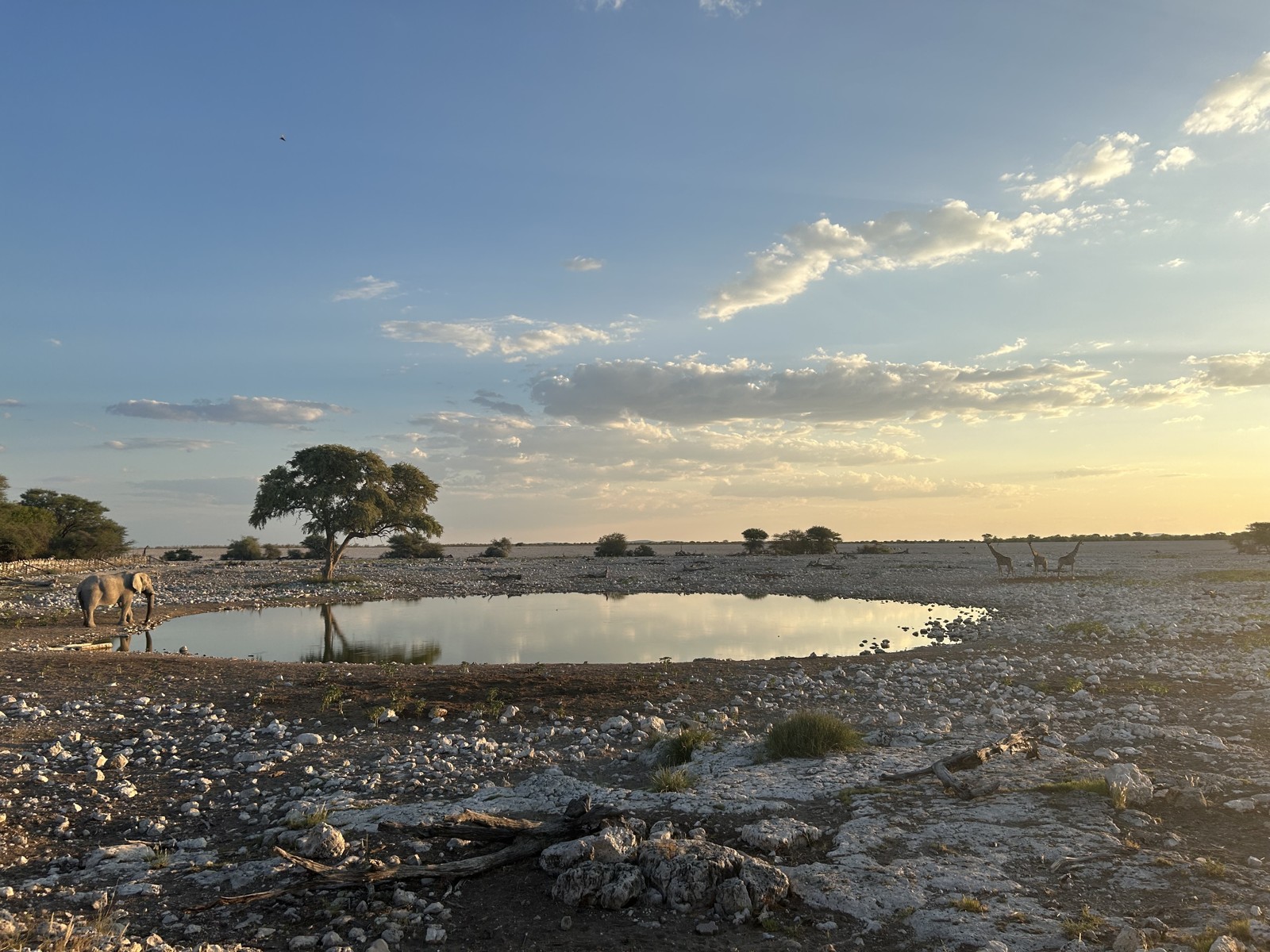
Image credit & rights
Waterhole Okaukuejo Camp in Etosha National Park.jpg — Hka1987, via Wikimedia Commons. CC0 1.0. Source: https://commons.wikimedia.org/wiki/File:Waterhole_Okaukuejo_Camp_in_Etosha_National_Park.jpg. Licence: https://creativecommons.org/publicdomain/zero/1.0/. Resized for web; no scene content changed.

If your main goal is classic game viewing, start with May to October.
Namibia Tourism Board guidance specifically identifies these months as Etosha's strongest general game-viewing period, when cooler, drier conditions encourage animals toward waterholes.
Within that window:
- May–June: cooler, early dry season, sometimes with more remaining vegetation;
- July–August: very dry, cold mornings, strong wildlife conditions;
- September–October: increasingly dry and often excellent around waterholes, but hotter as summer approaches.
If birds matter more than concentrated mammal viewing, the rainy season can be extremely rewarding. Fischer's Pan and other wet areas can attract flamingos, pelicans and other birdlife when conditions are suitable.
No responsible guide should promise a specific species at a specific waterhole on a specific day.
Wildlife is wildlife.
What is the best time for Sossusvlei and the Namib Desert?
There is a reason many people prefer the cooler months.
The Namib Desert can become extremely hot in summer, while winter days can be comfortable and nights very cold.
For most first-time visitors, May to September offers an easier temperature profile for early starts, dune walks and road trips.
But summer has its own visual rewards: stronger cloud formations and, after rain, scenes that look nothing like the permanent orange-and-blue image many travellers carry in their heads.
The non-negotiable rule is simpler than choosing a month:
Use the early morning.
What is the best time for Swakopmund and Walvis Bay?
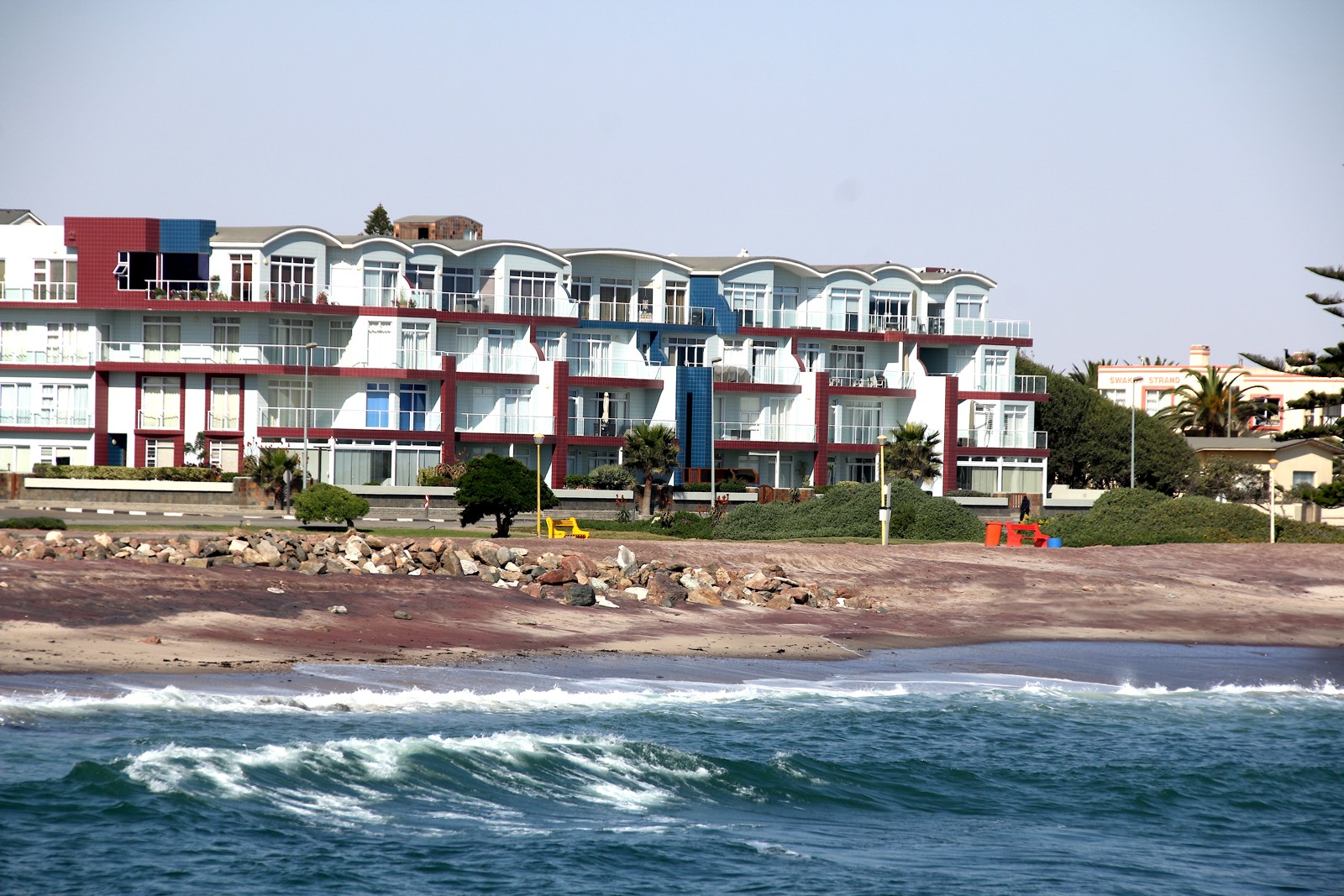
Image credit & rights
Swakopmund see from the Jetty.jpg — Hp.Baumeler, via Wikimedia Commons. CC BY-SA 4.0. Source: https://commons.wikimedia.org/wiki/File:Swakopmund_see_from_the_Jetty.jpg. Licence: https://creativecommons.org/licenses/by-sa/4.0/. Resized for web; no scene content changed.

The coast does not follow the interior neatly.
The cold Benguela Current keeps coastal temperatures lower throughout the year and fog is common, often lifting during the morning and returning later.
That means somebody can leave a very hot inland destination and arrive in Swakopmund wanting a jacket.
There is no single month when the coast suddenly becomes "normal Namibia" because the coast is normal Namibia — just a different part of it.
Choose Swakopmund and Walvis Bay based on what you want to do there rather than expecting them to match Etosha's temperatures.
What is the best time for Kavango and Zambezi?
This part of Namibia deserves its own seasonal logic.
The river systems, wetlands and relatively higher summer rainfall make Kavango and Zambezi fundamentally different from the central desert itinerary.
For the Kavango route, Namibia Tourism Board guidance says:
- June to October: generally stronger for game viewing as animals concentrate along the riverfront;
- November to March: generally stronger for bird watching.
That alone is a good example of why "the best month for Namibia" is the wrong question.
The best month for an Etosha waterhole trip and the best month for a birding-focused Kavango trip may not be the same month at all.
So when should you go?
Use your priority, not somebody else's itinerary.
Choose January to April if you want
- birding;
- greener landscapes;
- dramatic summer skies;
- fewer expectations of concentrated waterhole wildlife;
- a version of Namibia many first-time marketing photographs do not show.
Choose May to June if you want
- transition into the dry season;
- good road-trip weather;
- improving wildlife viewing;
- cooler days;
- some possibility of remaining green from the rains.
Choose July to September if you want
- strong wildlife viewing;
- dry conditions;
- clear winter skies;
- excellent stargazing;
- the classic self-drive safari season.
But book important accommodation earlier and pack for cold mornings.
Choose October if you want
- late dry-season wildlife;
- warmer conditions;
- the possibility of the first seasonal storms;
- and you can handle the heat.
Choose November to December if you want
- birding to improve;
- summer landscapes returning;
- seasonal change;
- greener northern regions as rains develop;
- and a trip that is less about copying the classic dry-season Namibia photograph.
The better way to plan your Namibia trip
Do not choose a month first and then force the entire country into it.
Start with the experience.
I want wildlife.
Look first at May to October and build the trip around Etosha and other wildlife areas.
I want birds and green landscapes.
Look seriously at November to April and give Kavango, Zambezi and Etosha's wet-season birdlife more attention.
I want a self-drive road trip with dry weather.
May to September is a strong starting point.
I hate cold mornings.
Do not automatically choose July simply because somebody called it "the best month".
I hate extreme heat.
Think carefully before building a desert-heavy itinerary around October to February.
I want the coast.
Pack for Swakopmund and Walvis Bay as the coast, not as an extension of inland Namibia.
The best time to visit Namibia is the time when the conditions fit the trip you actually want.
And once you know your month, the next question becomes easier:
where should you go, how long should you stay there, and where should you sleep along the route?
Continue planning
Namibia Travel Guide 2026: Visa, Money, Driving, Weather & Where to Stay
Driving in Namibia: Gravel Roads, Fuel, Distances & 4x4s
The Practical 14-Day Namibia Road Trip
Getting your bag ready? Use our Namibia packing guide for a core list and additions by season and region.
Sources and travel updates
Last checked: 4 October 2026.
Core source set: Namibia Tourism Board climate guidance, birding guidance, FAQ, northern-region/Etosha guidance, Kavango Open Africa Route guidance, current safaris and tours guidance, and the Ministry of Environment, Forestry and Tourism 2024 Tourist Statistical Report.
This article describes broad historical and seasonal patterns, not a weather forecast. Rainfall, temperature, road conditions, wildlife distribution and river levels vary by year and exact location. Travellers should check current weather and access conditions shortly before departure.