
Namibia travel · NamSpace
Namibia Travel Guide 2026: Visa, Money, Driving, Weather & Where to Stay
Plan your Namibia trip around entry requirements, money, driving, seasons and the places you want to stay.
As an Amazon Associate I earn from qualifying purchases. This article contains optional Amazon links. Check delivery and the full cost before buying.
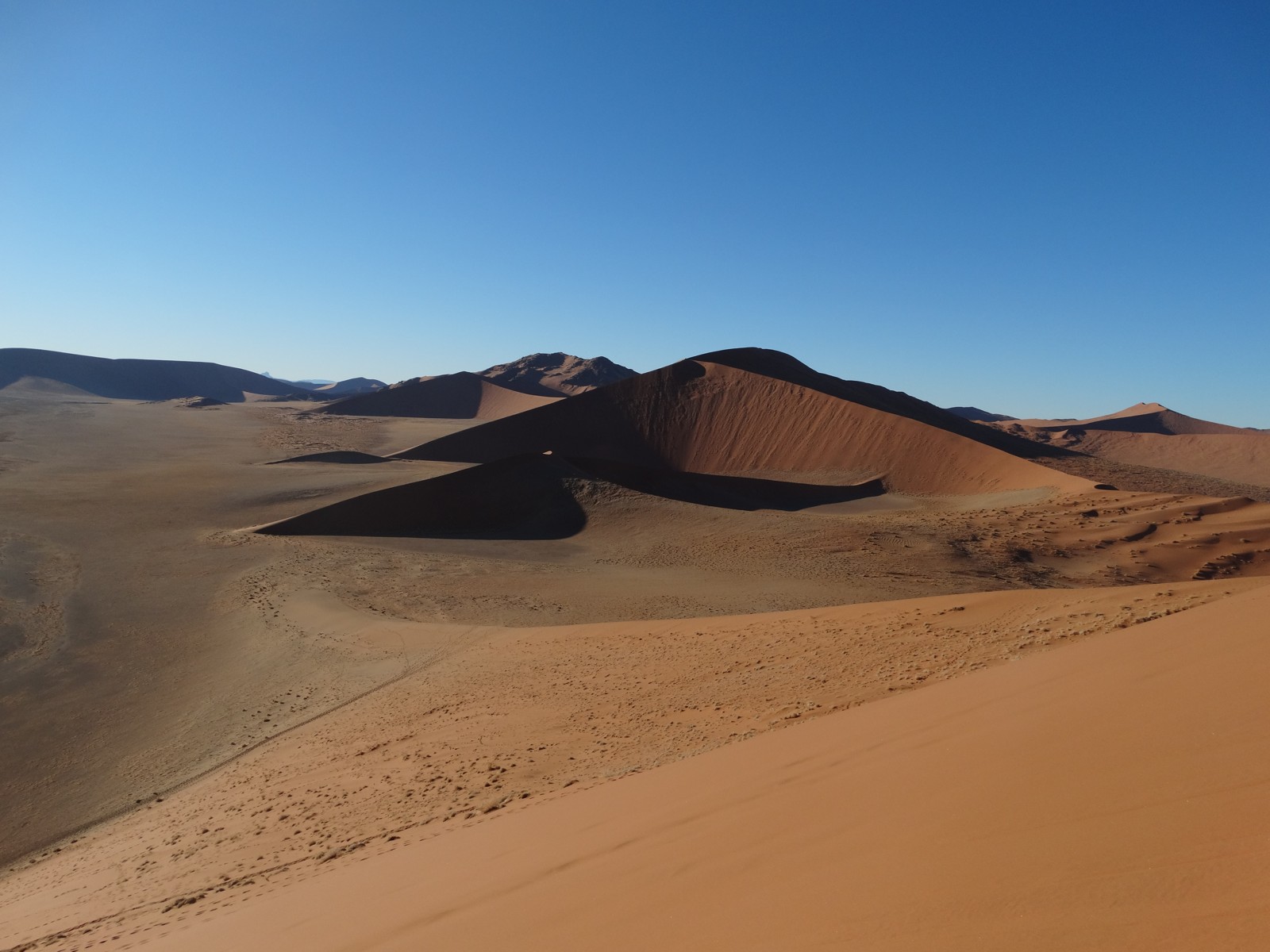
Image credit & rights
Sossusvlei Dunes Namib.jpg — Vicartb, via Wikimedia Commons. CC0 1.0. Source: https://commons.wikimedia.org/wiki/File:Sossusvlei_Dunes_Namib.jpg. Licence: https://creativecommons.org/publicdomain/zero/1.0/. Resized for web; no scene content changed.

Last checked: 4 October 2026
Namibia is one of those countries that can look deceptively simple when you first start planning. Windhoek. Sossusvlei. Swakopmund. Etosha. Maybe the Kavango or Zambezi if you have more time. Put the places on a map, connect the dots and it looks done.
Then you start looking at the distances.
That is usually where the real planning begins.
Namibia rewards people who leave enough room in their itinerary. It is a country made for road trips, slow mornings, long horizons and places that feel completely different from the place you slept the night before. But the same size and openness that make Namibia special can also make a badly planned trip tiring very quickly.
So this guide is not here to sell you the idea that you need to see everything. It is here to help you get the basics right before you arrive: entry requirements, money, driving, weather, how much time you really need and how to choose where to stay.
Namibia at a glance
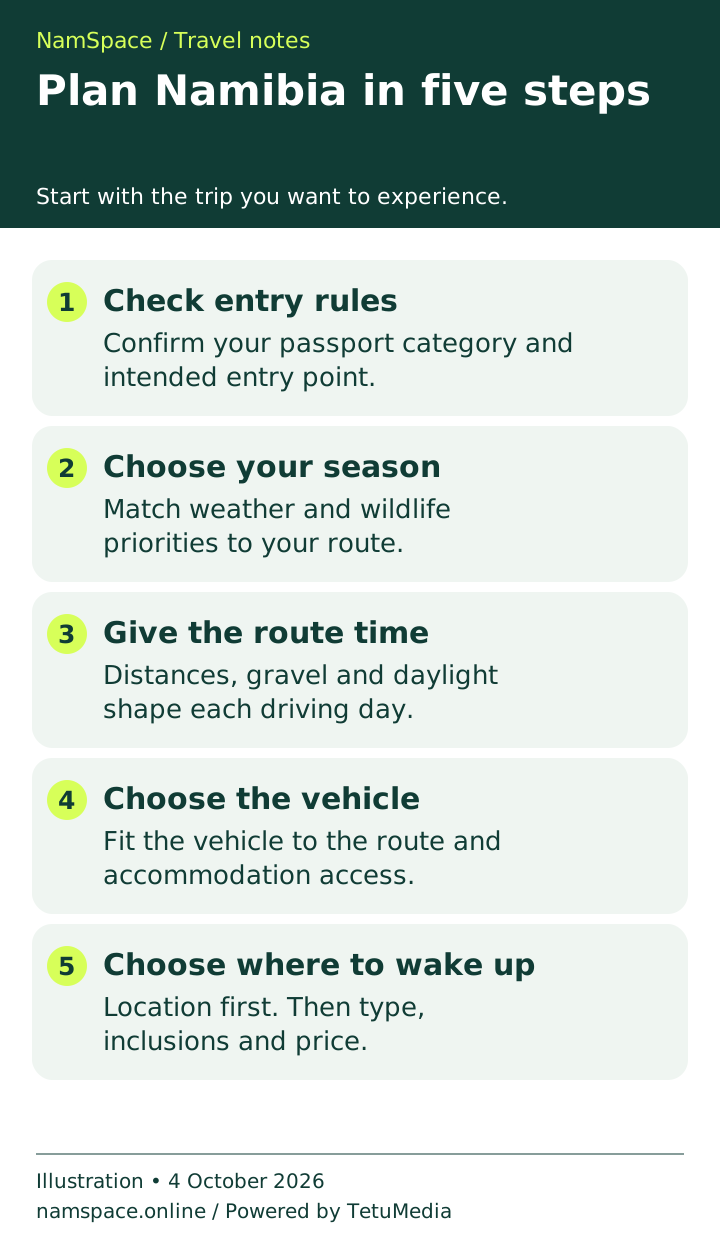
Image credit & rights
Illustration: NamSpace. Powered by TetuMedia.
- Currency: Namibian Dollar (N$ / NAD). The South African Rand is also accepted in Namibia at equal value.
- Driving: Left-hand side of the road.
- Best way to explore: For most independent travellers, by car.
- Summer: Roughly October to April; generally hotter and includes the rainy season.
- Winter: Roughly May to September; pleasant days in many areas, but nights can become very cold inland and in the desert.
- Wildlife viewing: The dry season, broadly May to October, is a strong period for game viewing.
- Peak travel period: The Namibia Tourism Board identifies July to November as peak season, so popular accommodation is worth planning earlier during this period.
- Main language: English is the official language, with Afrikaans, German and many Namibian languages also spoken.
- Time zone: Central Africa Time, UTC+2.
1. Check your visa requirements before you build the rest of the trip
Do this first, not after you have paid for accommodation.
Namibia’s entry requirements depend on your nationality. A revised visa policy took effect on 1 April 2025 for nationals of countries that do not provide reciprocal visa exemptions to Namibians. Depending on your nationality and circumstances, you may be visa-exempt, eligible for visa on arrival, able to apply online, or required to arrange a visa before travelling.
The important thing is not to assume that an old blog post, travel forum or advice from someone who visited Namibia three years ago still applies to you.
Namibia’s Ministry of Home Affairs provides an online e-services system for holiday visas and online visa-on-arrival applications. Check the current passport validity, blank-page and supporting-document requirements for your nationality and entry point.
If you are travelling with children, crossing a land border, entering with a hired vehicle or planning to stay for an extended period, check the specific rules that apply to your trip before departure.
NamSpace tip: Confirm current eligibility, fees and entry-point procedures through the Ministry of Home Affairs before booking.
2. Money in Namibia: cards work, but do not travel with only one way to pay
The Namibian Dollar is the official currency. It is linked at equal value to the South African Rand, and South African Rand notes can be used in Namibia. The reverse is not the same: Namibian Dollars are not legal tender in South Africa.
Visa and Mastercard are widely useful, especially in towns, established accommodation, restaurants and larger shops. ATMs are available across major towns. But Namibia is exactly the kind of place where carrying a reasonable cash backup still makes sense.
You may spend part of the day in Windhoek where card payments are easy and the next day be stopping at a small business, market, campsite or rural area where your options are different. Network availability can also vary once you move away from larger centres.
A simple approach works best:
- carry at least two payment options;
- keep some Namibian Dollars or South African Rand available;
- tell your bank you are travelling if necessary;
- avoid carrying all your cash in one place; and
- withdraw or sort out money while you are still in a larger town rather than waiting until you are somewhere remote.
You do not need to travel around Namibia with a huge amount of cash. You just do not want your entire trip to depend on one card working everywhere.
3. Driving in Namibia: distance matters more than the map makes it look
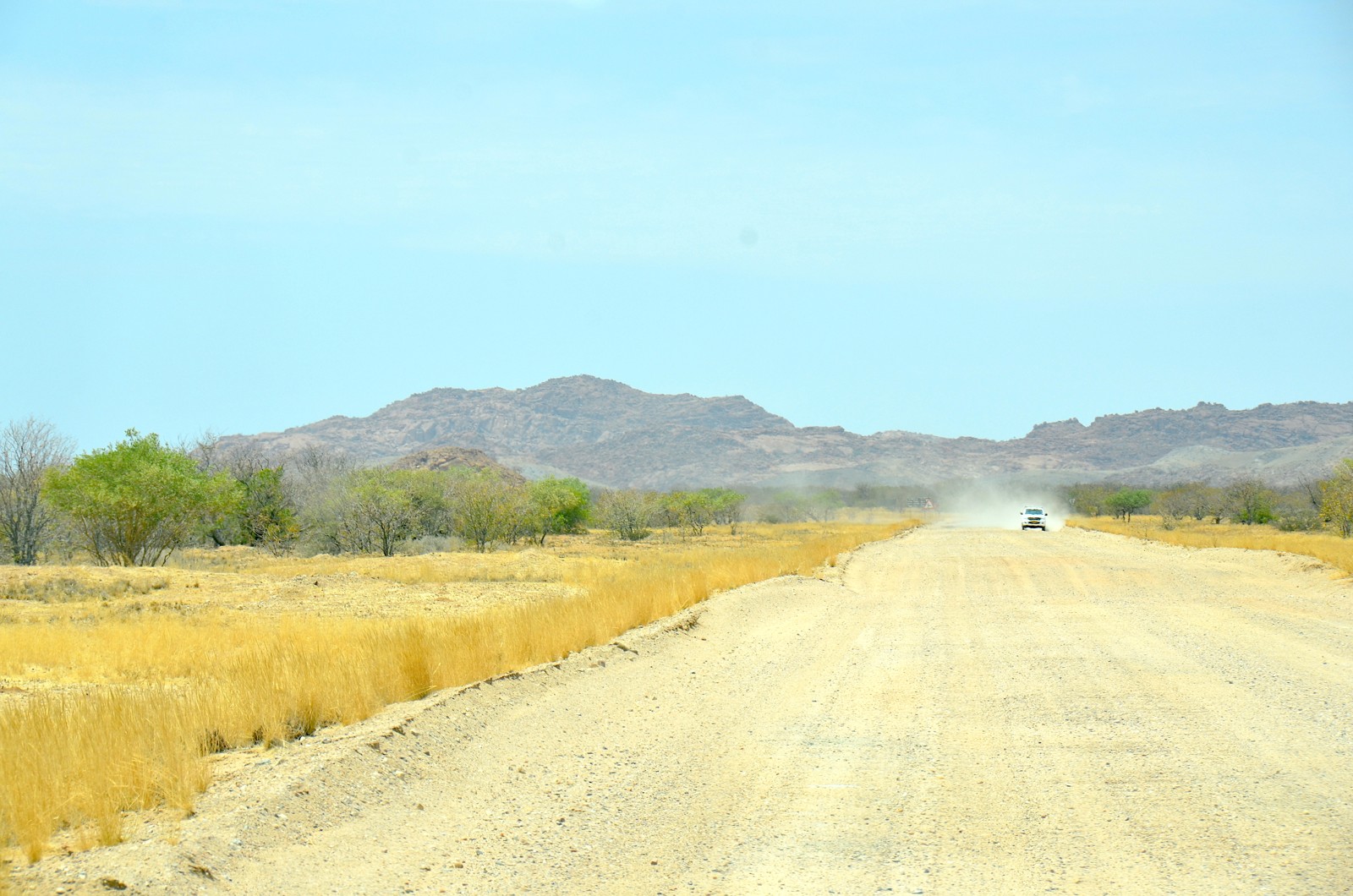
Image credit & rights
Gravel road, Namibia.jpg — Olga Ernst, via Wikimedia Commons. CC BY-SA 4.0. Source: https://commons.wikimedia.org/wiki/File:Gravel_road,_Namibia.jpg. Licence: https://creativecommons.org/licenses/by-sa/4.0/. Resized for web; no scene content changed.

For many visitors, the road trip is not simply a way of getting between attractions. It becomes part of the experience.
The Namibia Tourism Board describes self-driving as one of the best ways to explore the country. Namibia has an extensive road network, but a large proportion of it is gravel. The Tourism Board says at least 80% of the roads are gravel and recommends not exceeding 80 km/h on gravel roads.
Namibians drive on the left-hand side.
The biggest first-timer mistake is usually not choosing the wrong vehicle. It is trying to cover too much distance in too little time.
A route that looks manageable on Google Maps may include gravel roads, photo stops, fuel stops, animals, roadworks and simply the fact that you are visiting a country you have never driven through before. Give yourself room.
Do you need a 4x4?
Not automatically.
Many major routes and towns are accessible without one, but a 4x4 or high-clearance vehicle becomes more useful depending on where you are going, the season and the roads you intend to use. If your route includes more remote areas, deep sand or specific park and off-road sections, ask your rental company what vehicle is appropriate for the actual route rather than paying for or rejecting a 4x4 on principle.
A better rule for planning driving days
Do not ask only, “Can I drive this in one day?”
Ask, “Will I still enjoy the day after driving it?”
There is a difference.
If every second day of your holiday becomes a race to reach the next lodge before dark, you have probably put too much Namibia into too little time.
4. Namibia weather: there is no single Namibia temperature
One packing list for the entire country can be misleading because the coast, central plateau, desert and north-east can feel very different.
Namibia is generally dry and sunny, but temperatures can change sharply between day and night and between regions.
May to September
These are broadly the cooler winter months. Daytime conditions can be very pleasant, while nights and early mornings can become genuinely cold. In inland and desert areas, temperatures can fall to around freezing or below during the coldest periods.
If you are planning early wildlife drives, sunrise photography or camping, a warm layer is not optional simply because you are travelling in Africa.
October to April
Summer becomes hotter, with daytime temperatures in some areas reaching 35°C or higher. This period also includes Namibia’s rainy season. Rain is not necessarily an all-day event; conditions vary considerably by region and year.
The north-east, including Kavango and Zambezi, is greener and receives more rain than much of the rest of Namibia.
The coast is its own thing
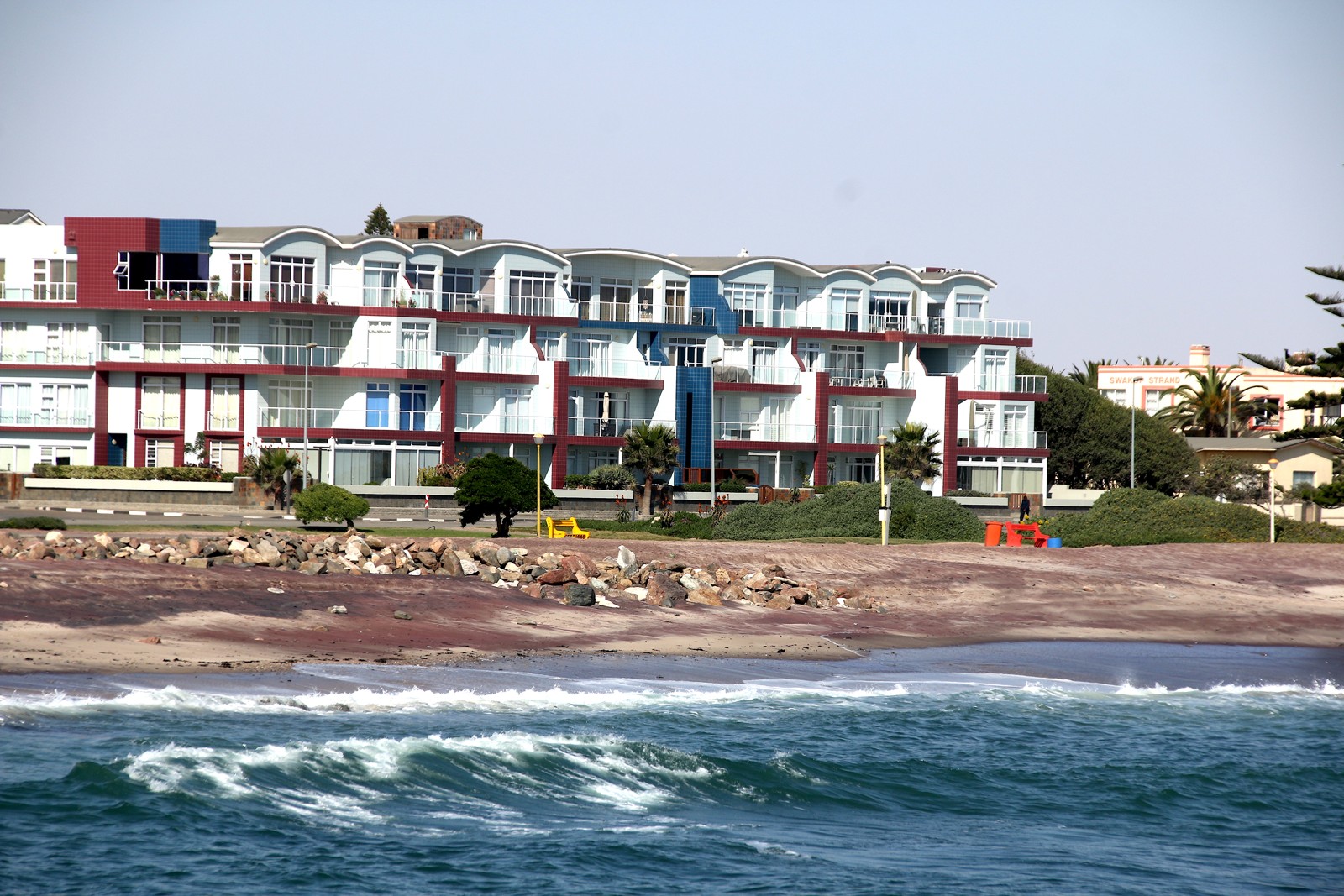
Image credit & rights
Swakopmund see from the Jetty.jpg — Hp.Baumeler, via Wikimedia Commons. CC BY-SA 4.0. Source: https://commons.wikimedia.org/wiki/File:Swakopmund_see_from_the_Jetty.jpg. Licence: https://creativecommons.org/licenses/by-sa/4.0/. Resized for web; no scene content changed.

Swakopmund and Walvis Bay can surprise people who arrive expecting desert heat. The cold Benguela Current keeps the coastal climate cooler, and fog is common.
You can leave a hot interior and arrive at the coast wanting a jacket.
That is normal Namibia.
5. So when is the best time to visit Namibia?
There is no single best month for everybody.
If wildlife is the main reason for your trip, the dry season from roughly May to October is particularly attractive because animals are easier to see around water sources and vegetation is generally less dense.
If you want greener landscapes, dramatic skies and birding, the wetter summer months can offer a completely different Namibia.
If you dislike extreme heat, the cooler months may suit you better. If you want to avoid the busiest period, consider travelling outside the July-to-November peak identified by the Namibia Tourism Board.
The better question is therefore not “When is Namibia best?”
It is “What do I want Namibia to look and feel like when I arrive?”
We will cover that properly in our month-by-month Namibia guide.
6. How many days do you actually need?
If this is your first visit, resist the urge to collect destinations.
Around 7 days
Choose a focus. You can have a very good Namibia trip in a week, but you probably should not try to cover the entire country.
A shorter trip could focus on Windhoek plus Sossusvlei and the coast, or Windhoek and Etosha with selected stops around the north-central route.
Around 10 days
You have more room for a classic highlights journey combining desert, coast and wildlife, provided you accept that there will still be meaningful driving days.
Around 14 days
This is where Namibia starts to breathe.
Two weeks gives you more room for a route such as Windhoek, Sossusvlei, Swakopmund or Walvis Bay, Damaraland and Etosha without every overnight stop feeling like a checkpoint.
It also gives you a better chance to slow down somewhere you actually like.
More than two weeks
Now places such as Rundu, Divundu, the Kavango River and Zambezi become easier to incorporate without turning the holiday into one long transfer.
Namibia is big enough that a second trip is not a planning failure.
7. Where should you stay on a first trip?
Start with the route, not the hotel.
A beautiful lodge in the wrong place can create a terrible itinerary.
Windhoek
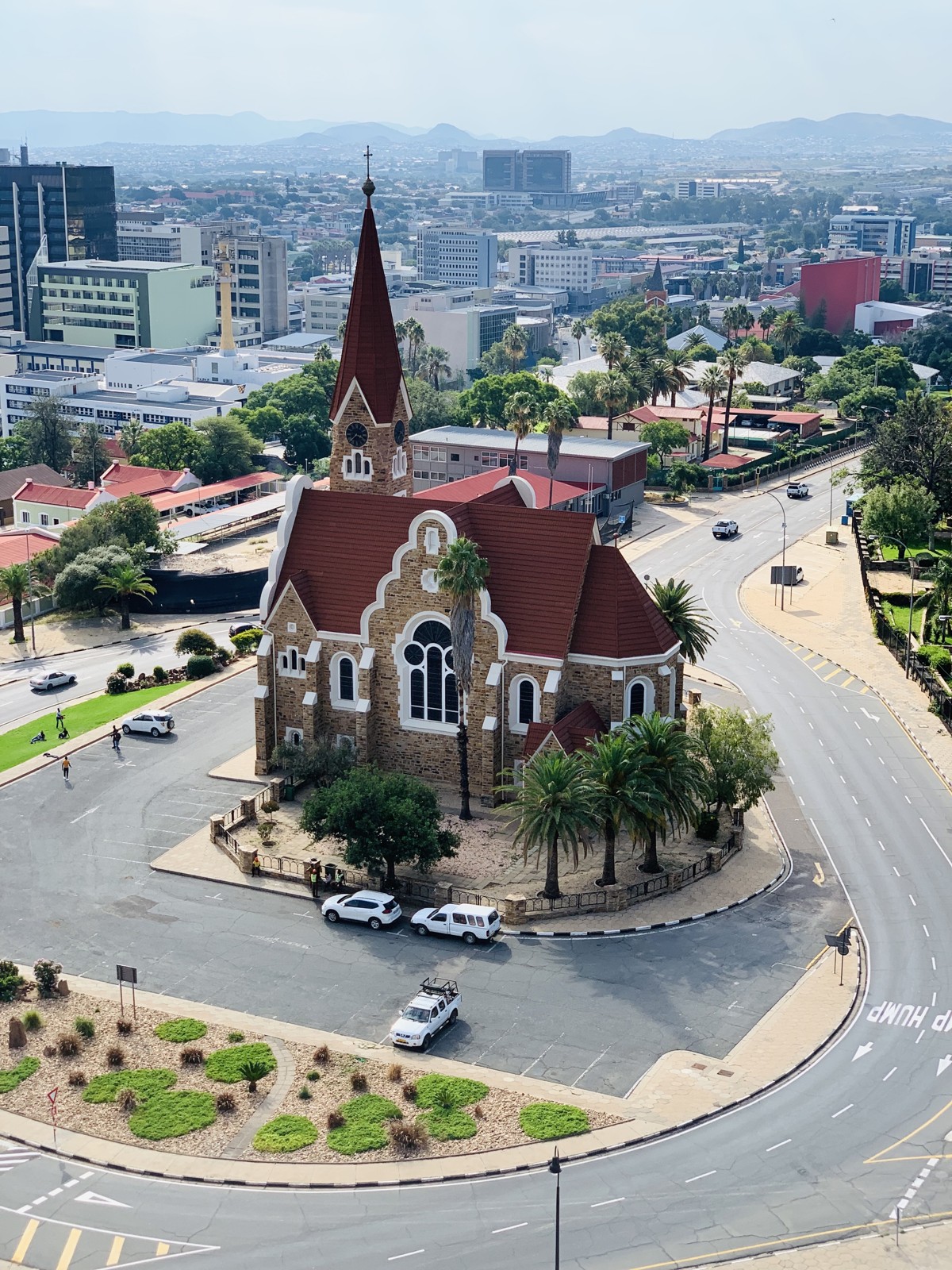
Image credit & rights
Windhoek Christuskirche Church.jpg — Gwasheya, via Wikimedia Commons. CC0 1.0. Source: https://commons.wikimedia.org/wiki/File:Windhoek_Christuskirche_Church.jpg. Licence: https://creativecommons.org/publicdomain/zero/1.0/. Resized for web; no scene content changed.

Useful for your arrival or departure, particularly if you do not want to land after a long international journey and immediately start a long drive. You will find guesthouses, hotels, apartments and self-catering accommodation across the city.
Sossusvlei / Sesriem area
Planning this stop? Read Sossusvlei and Deadvlei for first-timers for accommodation location, stay length and final-access questions.
Stay close enough to the park that you can make use of the early part of the day. This is one destination where your accommodation location can affect the experience because sunrise and cooler morning hours matter.
Swakopmund and Walvis Bay
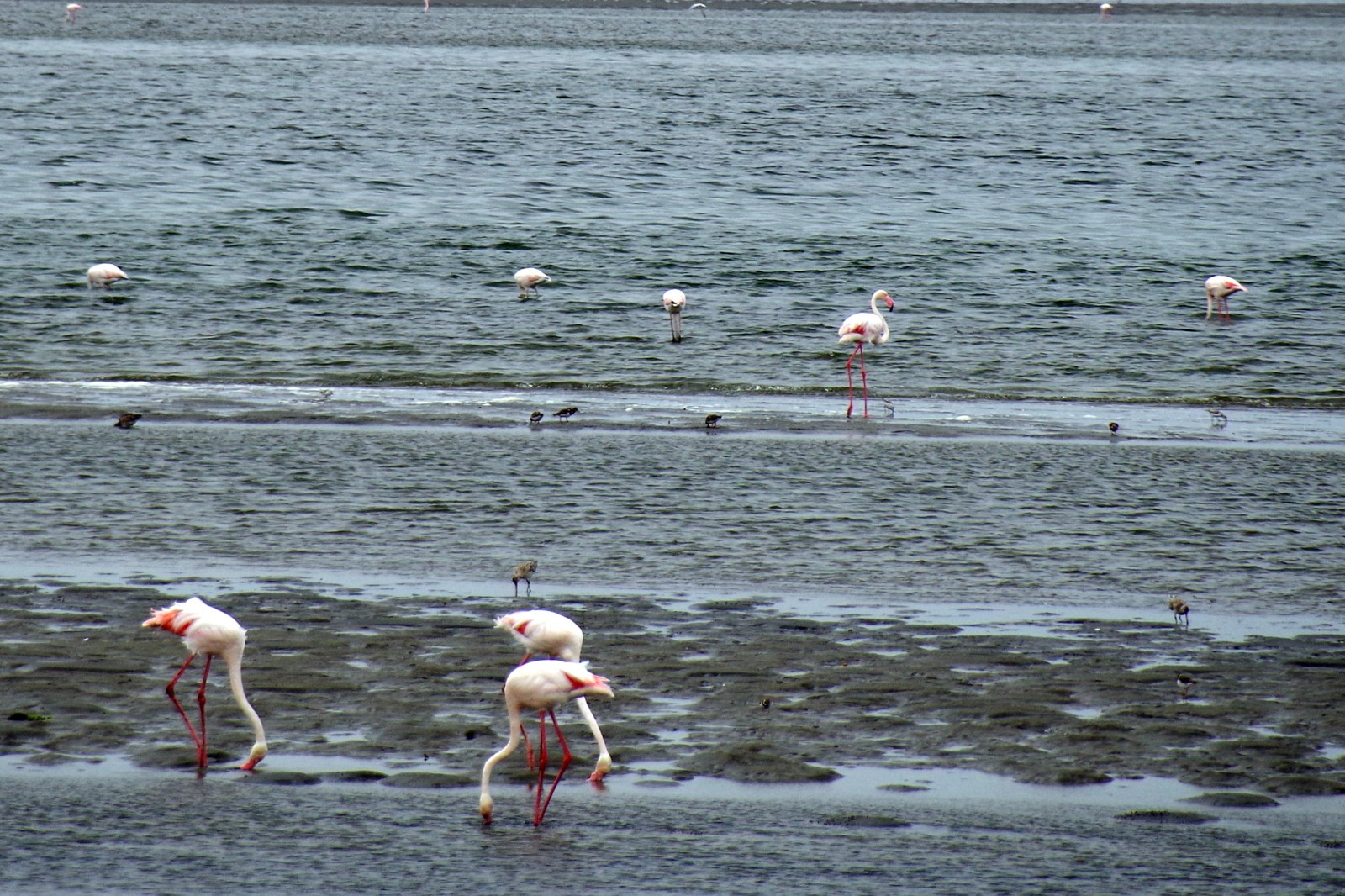
Image credit & rights
NA-walvisbay-lagoon-famingo.jpg — Balou46, via Wikimedia Commons. CC BY-SA 4.0. Source: https://commons.wikimedia.org/wiki/File:NA-walvisbay-lagoon-famingo.jpg. Licence: https://creativecommons.org/licenses/by-sa/4.0/. Resized for web; no scene content changed.

The coast works well as a reset between long inland driving sections. Swakopmund offers a broad mix of restaurants, accommodation and activities, while Walvis Bay places you closer to the lagoon and several marine and desert experiences.
They are close enough that many travellers consider both, but they do not give exactly the same stay.
Etosha
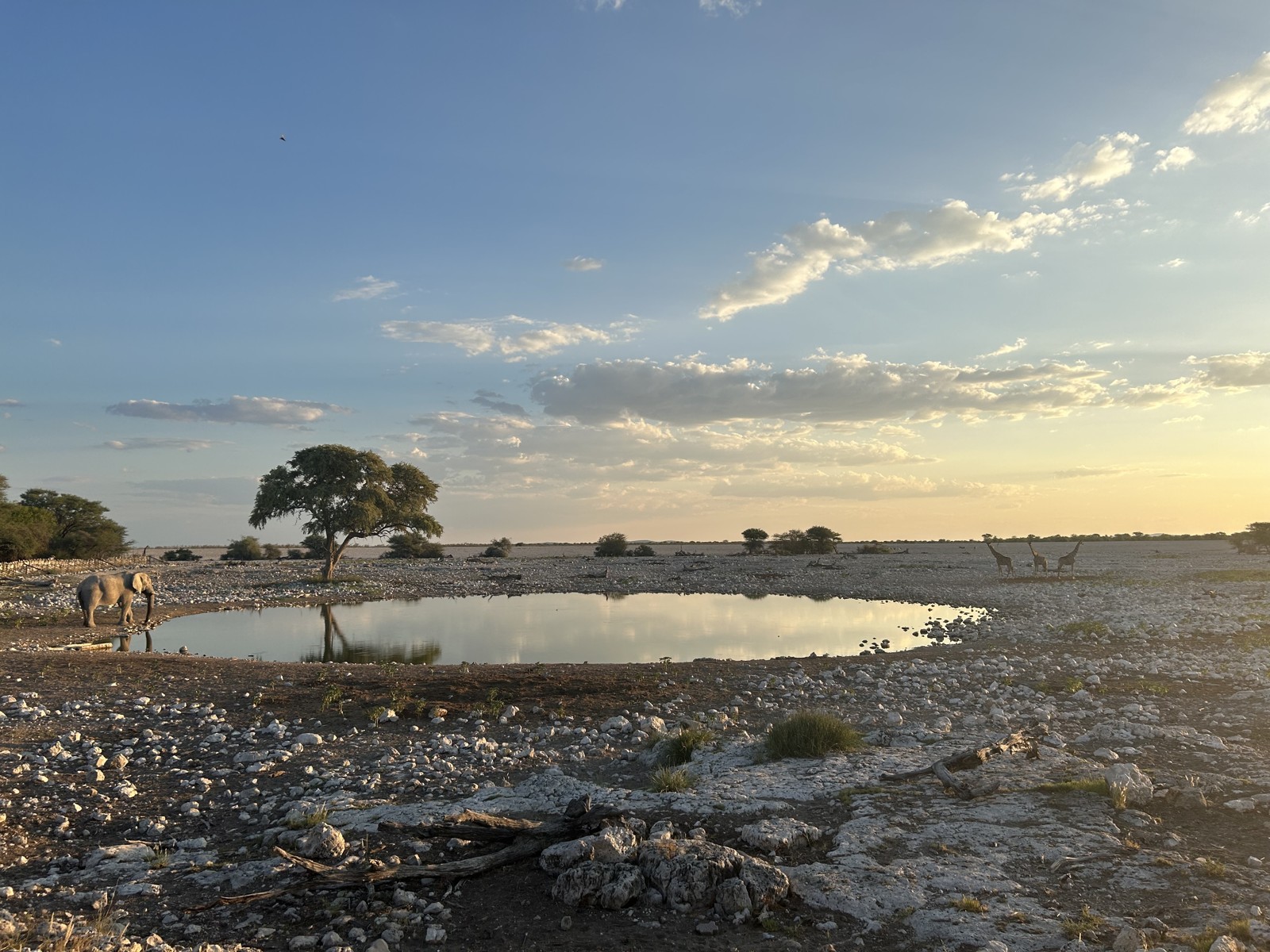
Image credit & rights
Waterhole Okaukuejo Camp in Etosha National Park.jpg — Hka1987, via Wikimedia Commons. CC0 1.0. Source: https://commons.wikimedia.org/wiki/File:Waterhole_Okaukuejo_Camp_in_Etosha_National_Park.jpg. Licence: https://creativecommons.org/publicdomain/zero/1.0/. Resized for web; no scene content changed.

Your choice is broadly between staying inside the park or using accommodation around the gates. What matters is understanding which gate and section of Etosha you want to explore. Saving money on a room can be false economy if it adds a large drive before every game-viewing day.
Kavango and Zambezi
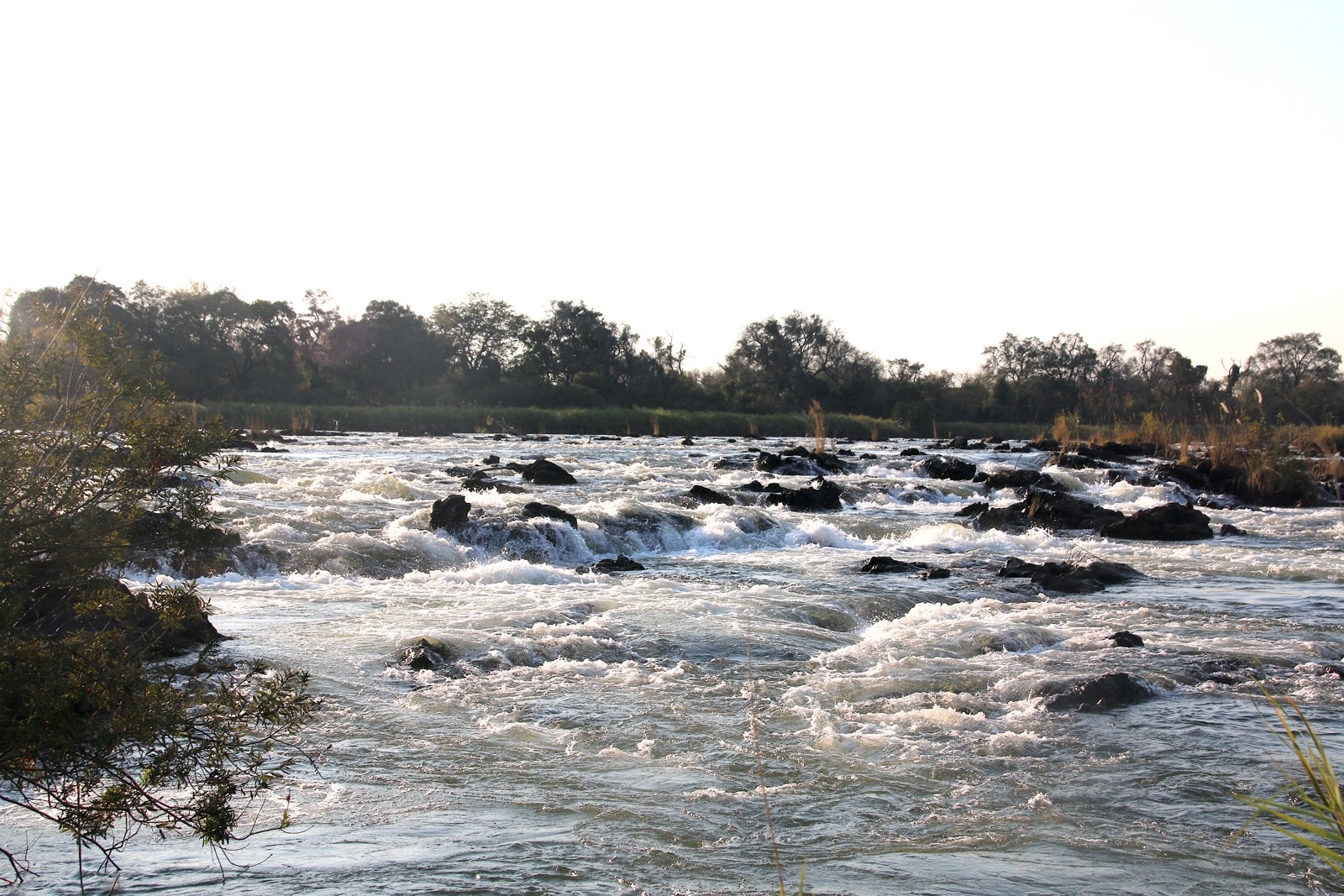
Image credit & rights
Popa Falls 2022 (03).jpg — Hp.Baumeler, via Wikimedia Commons. CC BY-SA 4.0. Source: https://commons.wikimedia.org/wiki/File:Popa_Falls_2022_(03).jpg. Licence: https://creativecommons.org/licenses/by-sa/4.0/. Resized for web; no scene content changed.

If your trip reaches Namibia’s north-east, slow down. This is not simply another version of the desert itinerary. The perennial rivers, greener landscapes, birdlife and river-based activities change the character of the journey completely.
Rundu can work as a regional stop, while the Divundu area gives access to river landscapes and nearby protected areas. Further east, the Zambezi Region opens another cluster of wildlife and river experiences.
NamSpace is gradually building its Stay collection around exactly this idea: helping travellers discover accommodation in the context of where they are actually going, rather than showing them a room with no sense of the journey around it.
8. Lodge, guesthouse, self-catering or campsite?
There is no correct accommodation type for Namibia.
A lodge can make sense when the property itself is part of the experience or you want meals and activities organised around you.
A guesthouse can be ideal in towns where you want something comfortable and personal without paying for a full resort experience.
Self-catering works particularly well for families, longer stays and travellers who want control over meals and costs.
Camping can reduce accommodation costs and put you closer to the landscape, but it changes the equipment and planning requirements of the trip.
Many travellers will use a mixture of all four during one journey.
That is often smarter than forcing the entire trip into one accommodation style.
9. Five mistakes that can make a Namibia trip harder than it needs to be
Trying to see the whole country in one short trip. Namibia is not small, and kilometres on gravel are not the same as kilometres on a motorway.
Checking visa requirements too late. Entry rules should be one of the first planning checks, especially after Namibia’s 2025 visa-policy changes.
Packing for “Africa” instead of your route. Desert mornings, the Atlantic coast and the north-east do not feel the same.
Depending on one payment method. Cards are useful, but having a cash backup is sensible once your trip moves beyond major centres.
Choosing accommodation only by price. Location can save or cost you hours of driving. On a road trip, the right overnight stop is part of the itinerary.
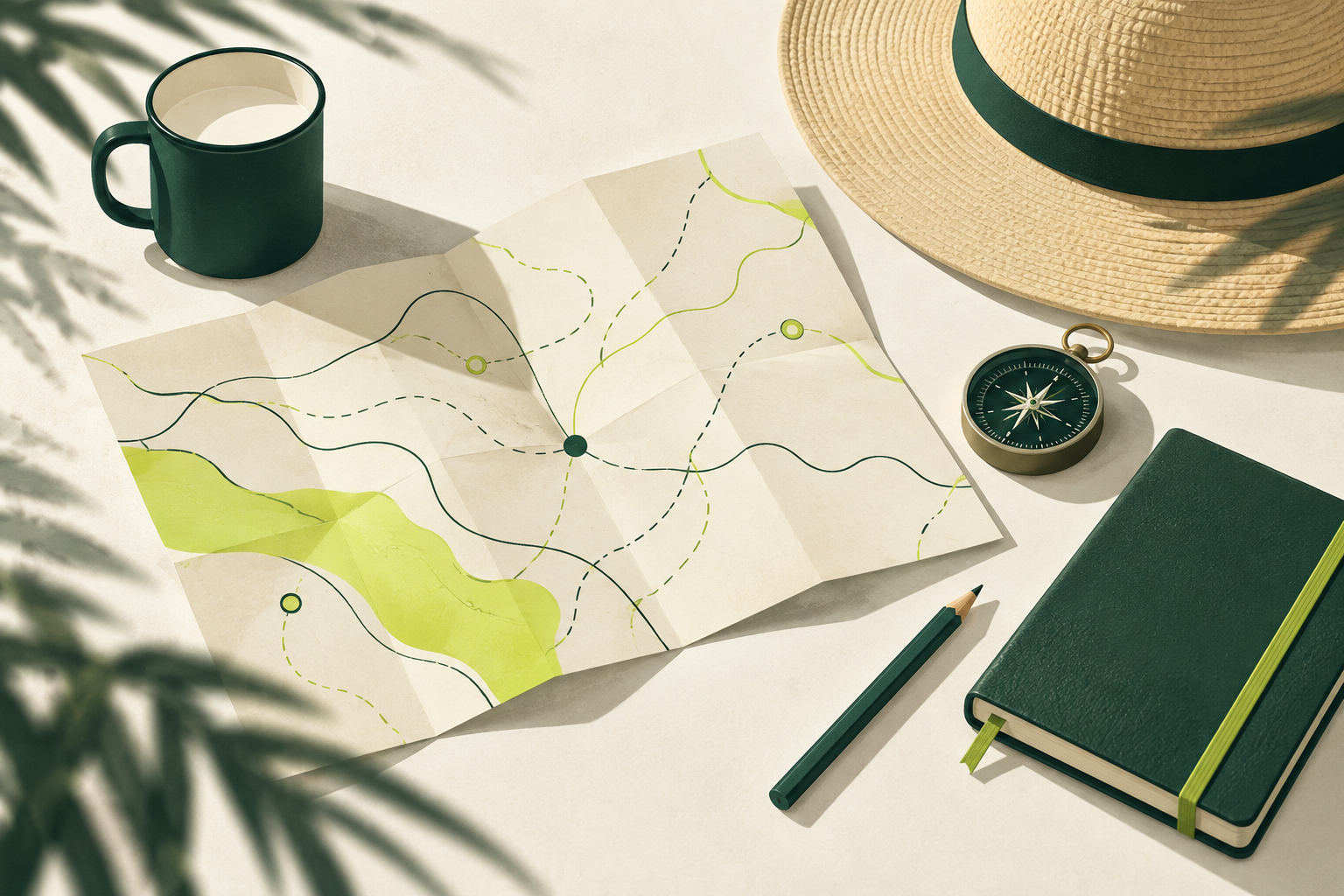
10. A simple way to plan your Namibia trip
Start with five questions:
- How many full days do I actually have in Namibia?
- What are the two or three experiences I would regret missing?
- How much driving am I comfortable doing?
- What season am I travelling in?
- Where should I sleep so tomorrow’s experience becomes easier, not harder?
Then build outward from those answers.
Do not start by copying a 15-stop itinerary from somebody else.
Your first Namibia trip does not need to contain everything Namibia has to offer. It needs enough space for you to actually experience the places you choose.
And once the route makes sense, finding the right stay becomes much easier.
Explore stays across Namibia on NamSpace and build your route around the places you actually want to experience.
Getting your bag ready? Use our Namibia packing guide for a core list and additions by season and region.
Comparing the full trip cost? Read Namibia on a Budget for complete quotes, route choices and a worked planning example.
Making room for north-eastern Namibia? Read Rundu to Divundu: A Kavango River Road Trip for community-led culture, river stays and a suggested four-night itinerary.
Continuing into Zambezi? Read our Zambezi Region Travel Guide for river time, cultural visits, park choices and a suggested five-night itinerary.
Sources and travel updates
This article was last checked on 4 October 2026 against current information from the Namibia Tourism Board, Namibia Ministry of Home Affairs, Immigration, Safety and Security, and Ministry of Environment, Forestry and Tourism.
Primary references:
- Namibia Tourism Board — Transportation: https://visitnamibia.com.na/transportation/
- Namibia Tourism Board — Climate: https://visitnamibia.com.na/climate/
- Namibia Tourism Board — Currencies: https://visitnamibia.com.na/currencies/
- Namibia Tourism Board — FAQ: https://visitnamibia.com.na/faq/
- Namibia Tourism Board — Safaris & Tours: https://visitnamibia.com.na/safaris-tours/
- Namibia Ministry of Home Affairs — Visa Fact Sheet Version 4, 28 May 2025: https://mha.gov.na/
- Namibia MEFT — tourism statistics and reports: https://www.meft.gov.na/downloads/
Visa rules, fees, border procedures and park/access conditions can change. Travellers should verify current official requirements before departure.