
Namibia travel · NamSpace
Sossusvlei & Deadvlei for First-Timers: When to Go, How Long to Stay and What to Know
Plan a manageable desert visit: where to stay around Sesriem, how many nights to allow, and what to confirm about vehicle access and transfers.
As an Amazon Associate I earn from qualifying purchases. This article contains optional Amazon links. Check delivery and the full cost before buying.
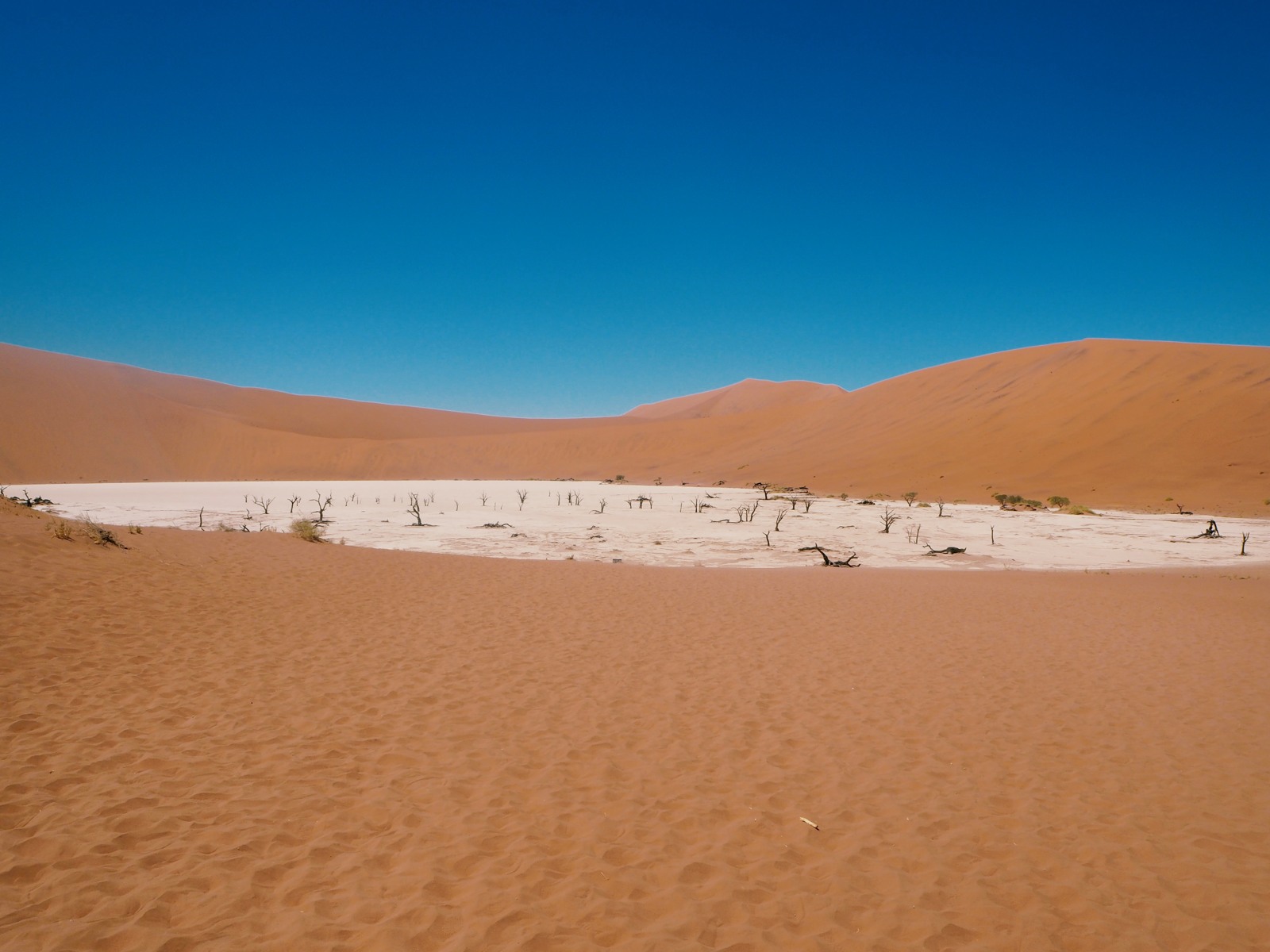
Image credit & rights
Deadvlei, Namibia.jpg — Ajka462, via Wikimedia Commons. CC BY-SA 4.0. Photograph dated 4 December 2018. Resized for web; no scene content changed. This adapted image remains under CC BY-SA 4.0.

Last checked: 4 October 2026
The photograph usually comes first.
A dark tree. A white pan. An orange dune behind it. You see Deadvlei and decide that, whatever else happens on your Namibia trip, you want to stand there.
Then the practical questions arrive. Where do you sleep? Can your rental car reach it? Does staying “near Sossusvlei” mean you are near the entrance? And how early do you actually need to leave?
The simplest way to plan this part of Namibia is to give it a full day and make the previous night work for that morning. For most first-time visitors, I would start with two nights around Sesriem, rather than treating the desert as a quick stop between long drives.
You do not need to climb every dune. You need enough time to enjoy the place you came to see.
Sossusvlei in one minute
- Sesriem is your planning anchor: confirm your accommodation’s actual distance and route to the entrance.
- Sossusvlei and Deadvlei are different pans: people often use “Sossusvlei” for the wider excursion, but the famous dead-tree photograph is Deadvlei.
- Allow a full sightseeing day: two nights gives you an arrival afternoon, a desert day and a separate onward-travel day.
- Arrange the final transfer before setting off: reaching Sesriem is different from travelling through the sand near the pans.
- Start early within the access allowed to you: gate permissions, your accommodation and your transfer determine what “early” means.
- Choose one main walk or climb: leave room for the return journey, heat and an unhurried look around.
First, understand the three names
Sesriem: where the visit begins
Sesriem is the gateway used for this desert excursion. It is also where you will find the canyon and accommodation serving visitors to the dunes.
Use Sesriem when comparing locations. A lodge’s name can contain “Sossusvlei” while its entrance is still a substantial drive from the park gate. Ask for the actual location, the road you will use and the time your host recommends allowing.
Sossusvlei: the name used for the wider trip
Sossusvlei is a pan within the Namib-Naukluft landscape. In travel conversation, the name often stands for the whole visit: the approach through the dunes, Deadvlei and the surrounding area.
That shorthand is useful until you book a drive. Then it matters exactly which places the excursion includes and how much time you get at each stop.
Deadvlei: the white pan with the dark trees
Deadvlei is the separate clay pan famous for its dead trees and surrounding dunes. The trees are part of the landscape, not props. Leave them undisturbed and give other visitors room to experience the pan too.
The wider Namib Sand Sea is a UNESCO World Heritage Site. Its scale is one reason to slow down: this is much more than the one photograph you recognised before arriving.
When is the best time to visit?
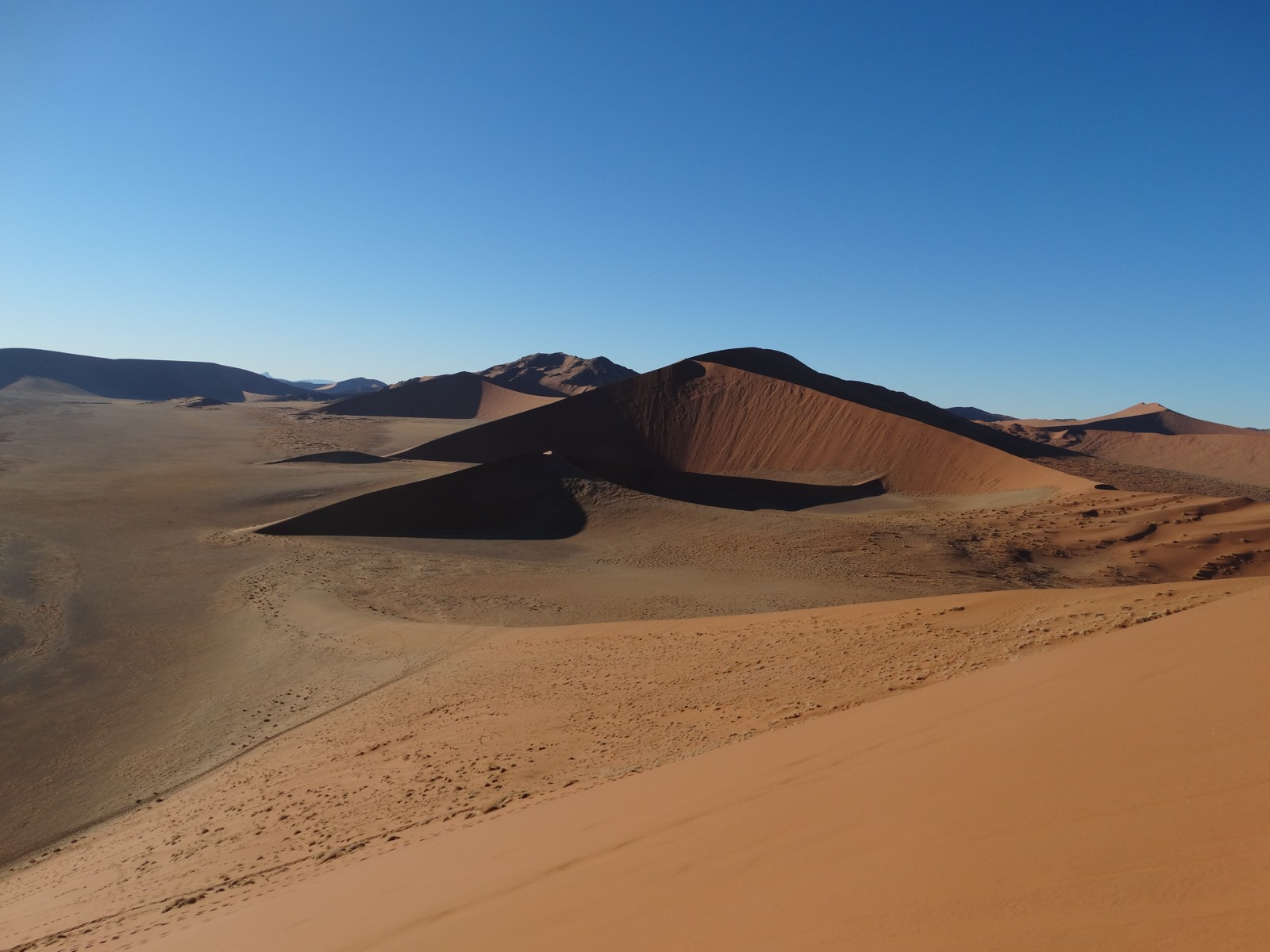
Image credit & rights
Sossusvlei Dunes Namib.jpg — Vicartb, via Wikimedia Commons. CC0 1.0. Resized for web; no scene content changed.

For a first trip involving walks and dune climbing, I would consider May to September as a starting point. Namibia’s winter period generally offers more comfortable daytime temperatures, although early mornings and nights can be cold.
That recommendation is about comfort, not a promise of perfect conditions.
October to April can be much hotter. If those are your travel dates, keep the demanding part of your visit early, reduce the amount you expect to climb and leave a generous rest period. Check the actual forecast before choosing your day’s activities.
Wind, cloud, rainfall and local conditions affect how the desert looks and feels. Do not build the trip around a guaranteed orange sunrise or a particular photograph.
For the wider route, read Best Time to Visit Namibia. A comfortable month for the desert does not remove the need to pack differently for the coast.
How many nights should you stay?
| Time available | What it gives you | What to watch |
|---|---|---|
| One night | An arrival evening and a visit the next morning | A long onward drive can squeeze the visit. Keep the next stage modest. |
| Two nights | An arrival afternoon, a full desert day and a separate departure day | This is my starting recommendation for most first-time road trips. |
| Three nights | More room for a second morning, photography, a guided activity or a slower pace | Decide what you want the extra day to do, rather than adding stops automatically. |
Two nights does not mean two full days in the park. It means you are not trying to arrive, see everything and leave on the same day.
That is the rhythm used in our Practical 14-Day Namibia Road Trip: travel to the Sesriem area, spend the following day in the desert, then continue toward the coast.
Where should you stay: inside or outside?
Start with tomorrow morning, then compare rooms.
The important questions are the distance to the entrance, the access your specific booking allows, how you will travel to the pans and whether meals fit your departure time.
An inside-park stay
An inside-park location may offer different access arrangements from accommodation outside. NWR’s Sossus Dune Lodge page, for example, describes access that allows its guests to reach Sossusvlei before sunrise and remain until after sunset.
That is information about that establishment, not a benefit you should assume applies to every property in the region. Confirm what your own booking includes, whether a guided excursion is needed and the current departure arrangements.
An outside-park stay
An outside stay can work very well if its location suits your budget and your morning plan. Check the actual drive to Sesriem and the gate opening that applies to you. A cheaper room far away may cost you the calm early start you wanted.
Camping
Camping can suit a road trip, but the equipment and meal plan need to be realistic. Ask about the campsite’s access, facilities, check-in arrangements and what you must bring. NWR operates Sesriem Campsite; its current information is linked in the sources below. This is a public accommodation reference, not a claim of NamSpace partnership.
Use Where to Stay in Namibia to compare accommodation types. Then browse NamSpace Stay for listed options along your wider route and confirm arrangements directly with the establishment.
Can you visit with a 2WD, or do you need a 4x4?
Separate the journey into three parts.
| Part of the visit | The decision to make |
|---|---|
| Your road trip to Sesriem | Choose a vehicle for the full route, road conditions and rental contract—not only this one excursion. |
| The approach through the park | Allow time for the drive. NWR lists Sossusvlei about 60 km from Sesriem; entering the gate is not arriving at the pans. |
| The final sandy access and onward walk | Confirm the permitted transfer or self-drive arrangement, the correct pickup point and the walking involved. |
A 2WD visit can be planned around an arranged transfer or guided excursion. Do not take an ordinary 2WD into deep sand, and do not assume a vehicle described as an SUV has four-wheel drive.
A suitable 4x4 is still only part of the decision. Current park permission, the rental agreement and your sand-driving experience also matter. Hiring a 4x4 does not automatically establish permission to drive the final section yourself.
Check the shuttle arrangement before your morning
Shuttle operations have changed over time. NWR’s October 2024 notice described a move in its departure point, while its current campsite page lists shuttle services. Those pages should not be combined into a guaranteed present-day pickup schedule.
Before travelling, ask the park or your chosen operator:
- Where does this service depart?
- Do I need to book or buy a ticket in advance?
- What are the current departure and return arrangements?
- Does it include both the outward and return transfer?
- Where will I be dropped, and how much walking remains?
- If I want to self-drive the sand, is that currently permitted for my vehicle and booking?
Get the arrangement clear the previous afternoon. It is easier than solving it after you have driven toward the pans.
For vehicle selection and the rest of the journey, see Driving in Namibia and the Car & 4x4 Hire Directory.
A practical first full day
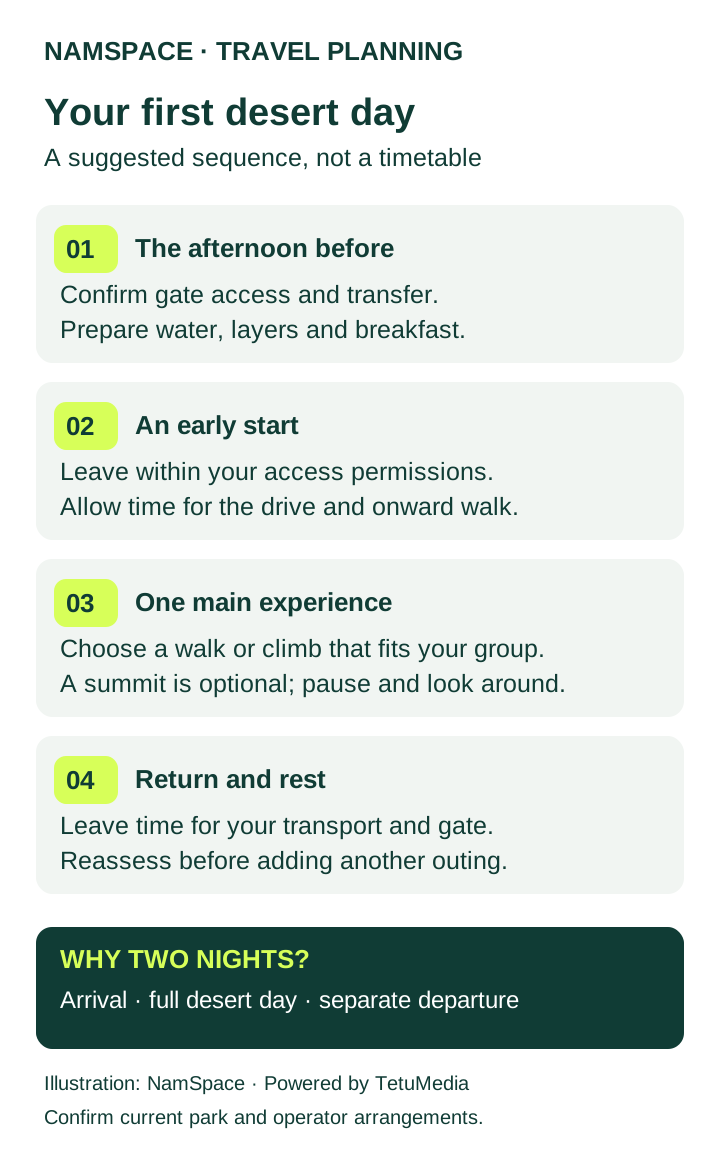
Image credit & rights
Original illustration: NamSpace. Powered by TetuMedia.
The previous afternoon: remove the small uncertainties
Arrive with daylight available. Check in, confirm the next morning’s access and transfer, organise breakfast, and prepare water, snacks, layers, sun protection and footwear.
Ask about fuel and current local services before you rely on them. Download the directions you need and keep your booking information available offline.
This is preparation time, not a lost sightseeing afternoon.
Early morning: do your main visit first
Leave at the earliest time your access and arrangements allow. If Deadvlei is the reason you came, build the morning around reaching it rather than stopping at every promising view on the way.
There will still be a drive, a transfer if needed and a walk. Leave enough time for all three.
At the pans: choose the experience that fits you
A visit to Deadvlei does not require reaching the summit of the largest dune. Walking on sand takes effort, and your group may have very different ideas about what counts as an enjoyable climb.
Choose one main walk or climb that fits the conditions and the least comfortable person in the group. You can turn back. You can skip a summit. You can spend more time looking instead.
For a guided excursion, ask how much walking it includes before booking. A vehicle transfer does not make the whole visit step-free.
Later: leave space for the return
Allow time to return to your transport and the gate within the required operating hours. Eat, rest and reassess before adding another outing.
Sesriem Canyon can be a separate visit when access and conditions are suitable. Ask locally about the current situation, especially after rain. Do not force it into the day merely because it appears on the same destination list.
What should you bring for the day?
Pack for walking away from your vehicle, rather than leaving everything useful in the boot:
- Drinking water for the visit and return, with a reserve appropriate to your group and conditions.
- A hat, sunglasses and sun protection.
- Comfortable footwear that works on sand.
- A warm layer for a cold start.
- Snacks or the breakfast arrangement you confirmed.
- Your permit, booking or transfer details.
- A charged phone and any necessary offline information.
- Protection for camera equipment against sand and dust.
Carry your own essentials even on a guided excursion, and ask what the operator supplies. With children, allow for slower walking, breaks and a shorter plan. Discuss mobility needs with the operator before paying for an activity.
What will the visit cost?
Build the budget from separate parts: accommodation, park entry, your vehicle’s entry charge where applicable, a transfer or guided excursion, meals and fuel.
Ask whether a quoted activity price includes park fees and the return journey. Ask whether accommodation is per person, per room or per campsite, and which meals are included.
Park charges and operating tariffs can change and may depend on your visitor category. Obtain the current amount from MEFT and the relevant operator for your travel dates. An old price copied into a blog is a poor basis for the day’s budget.
Photography: bring home the scene without changing it
Give yourself time to find a composition rather than reproducing the first photograph you saw online. Keep other visitors’ experience in mind and avoid blocking a shared route for a long setup.
Do not climb, move or damage the dead trees. Keep to permitted areas, leave the site as you found it and check the rules before considering a drone. A dramatic photograph is not a reason to ignore park instructions.
The documentary images in this article show the real landscape on their recorded dates. They do not guarantee the same light, weather or visitor conditions on your trip.
Five mistakes worth avoiding
Choosing the room before checking the location. Start with the gate and tomorrow’s visit, then compare accommodation.
Treating the entrance as the destination. The park drive and final access still need time.
Assuming a shuttle works exactly as an old article describes. Confirm the service you will actually use.
Making the biggest climb the measure of a successful visit. Choose a day you can enjoy, not a summit you feel obliged to reach.
Putting a long drive immediately after the desert morning. A separate departure day often makes the whole route better.
The plan I would start with
Arrive around Sesriem with daylight to settle in. Confirm the next morning’s access, pack what you need and stay two nights if your wider route allows it.
Give Deadvlei and the dunes a full day. Choose the walk or climb that suits your group, and leave time for rest.
Then continue with enough energy for the next part of Namibia.
The place is memorable enough. Your itinerary does not need to make it harder to enjoy.
Continue planning
- Namibia Travel Guide 2026
- Practical 14-Day Namibia Road Trip
- Best Time to Visit Namibia
- Driving in Namibia
- Where to Stay in Namibia
- Swakopmund vs Walvis Bay
Getting your bag ready? Use our Namibia packing guide for a core list and additions by season and region.
Sources and travel updates
Checked 4 October 2026. Seasonal guidance describes broad patterns. Confirm park access, gate hours, permits, fees, shuttle arrangements, road conditions and accommodation details directly before travelling.
- MEFT: Namib-Naukluft Park
- MEFT: park permit requirements
- MEFT: shuttle concession clarification, 5 September 2024 — historical operational context, not proof of every current access rule.
- NWR: Sesriem Campsite
- NWR: Sossus Dune Lodge
- NWR: shuttle update dated 14 October 2024 — a dated notice, not a current timetable.
- Namibia Tourism Board: climate
- UNESCO: Namib Sand Sea